ITS Network Infrastructure
and traffic operations.
Reliable, Secure, and Resilient Networks for ITS Deployments
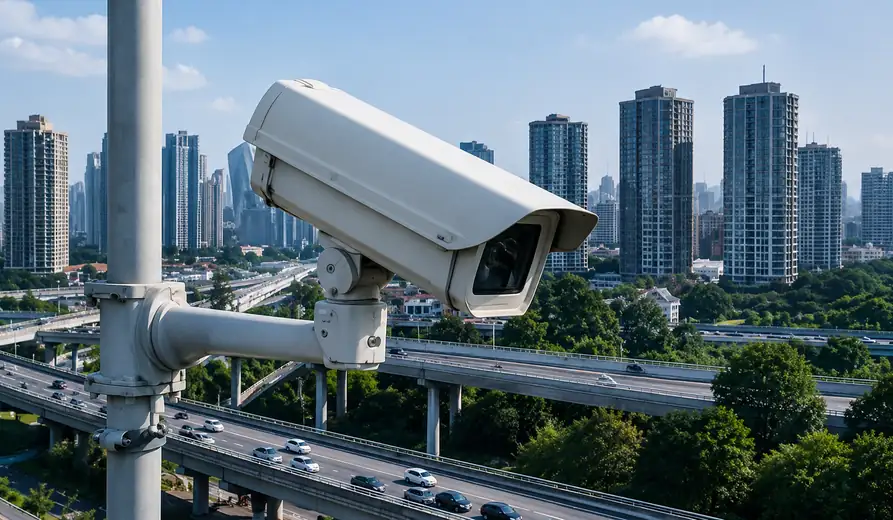
Intelligent transportation systems rely on field networks that connect roadside devices, tunnels, traffic operations, control centers, and remote sites. A complete ITS network solution must support stable video transmission, long-distance fiber backbone connectivity, redundant communication paths, secure remote access, centralized visibility, and rugged operation in demanding roadside environments. For system integrators and transportation operators, the network layer is the foundation that keeps field devices, control platforms, and traffic management workflows connected as one coordinated infrastructure.
Match Each ITS Challenge with the Right Network Approach

Roadside CCTV, tunnel surveillance, intersection monitoring, and public safety systems generate large volumes of video traffic that must remain stable and visible to operators.
Network Approach
Gigabit Ethernet, fiber uplinks, PoE/PoE+/PoE++ switching, traffic prioritization, and centralized monitoring help maintain video quality and network visibility. In some solutions, proprietary traffic optimization or management software can further help operators identify link status, device events, and abnormal traffic more quickly.

Highways, tunnels, bridges, and large traffic corridors require stable communication across widely distributed field cabinets and remote devices.
Network Approach
Fiber backbone, long-reach SFP modules, wireless backhaul, and field aggregation switches help connect roadside cabinets, tunnels, intersections, and control rooms across long distances. There are also proprietary long-reach and wireless technologies available for projects that require additional stability in difficult deployment areas.

Traffic control, incident response, tolling, and public safety applications need uninterrupted communication even when a link or device fails.
Network Approach
Redundant topology design, ring recovery, dual uplinks, and resilient power planning reduce the risk of service interruption. Certain vendors provide proprietary redundancy mechanisms or fast-recovery technologies to keep critical traffic services running when a link or device fails.

ITS networks are increasingly connected to monitoring platforms, control centers, and remote maintenance workflows, making secure access and hardened communication essential.
Network Approach
Secure switching, access control, network segmentation, encrypted management, and event visibility help protect transportation infrastructure and operational data. Some industrial network suppliers also provide proprietary security management tools that simplify configuration and strengthen overall cyber resilience.

Field teams need practical ways to check device status, identify network events, and maintain remote cabinets without unnecessary site visits.
Network Approach
Centralized device management, remote configuration, alarm monitoring, and troubleshooting workflows help reduce field visits and maintenance time. In addition, proprietary network management platforms are available from some vendors to support topology visualization, diagnostics, and remote maintenance across distributed ITS sites.

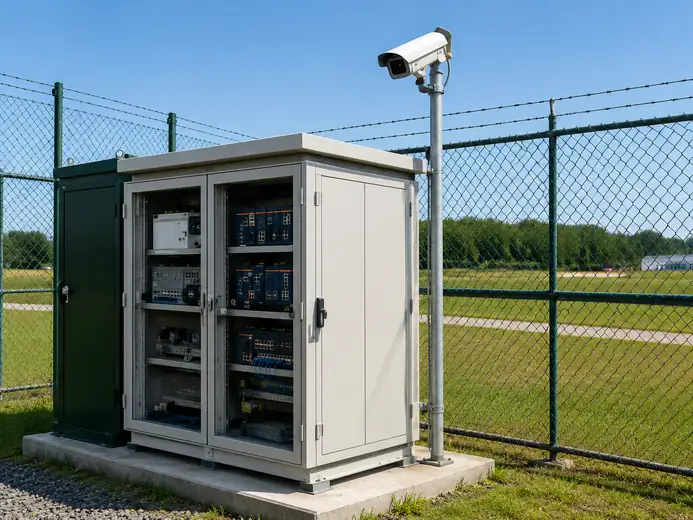
Outdoor cabinets, tunnels, bridges, and roadside installations face temperature variation, vibration, dust, moisture, and electromagnetic interference.
Network Approach
Wide-temperature hardware, rugged enclosures, EMC/EMI protection, vibration resistance, and industrial-grade components help maintain communication in roadside, tunnel, and outdoor environments. Some products also include proprietary thermal design or protective coating technologies for extra durability in harsh field conditions.
ITS Network Layers from Field Sites to Control Centers
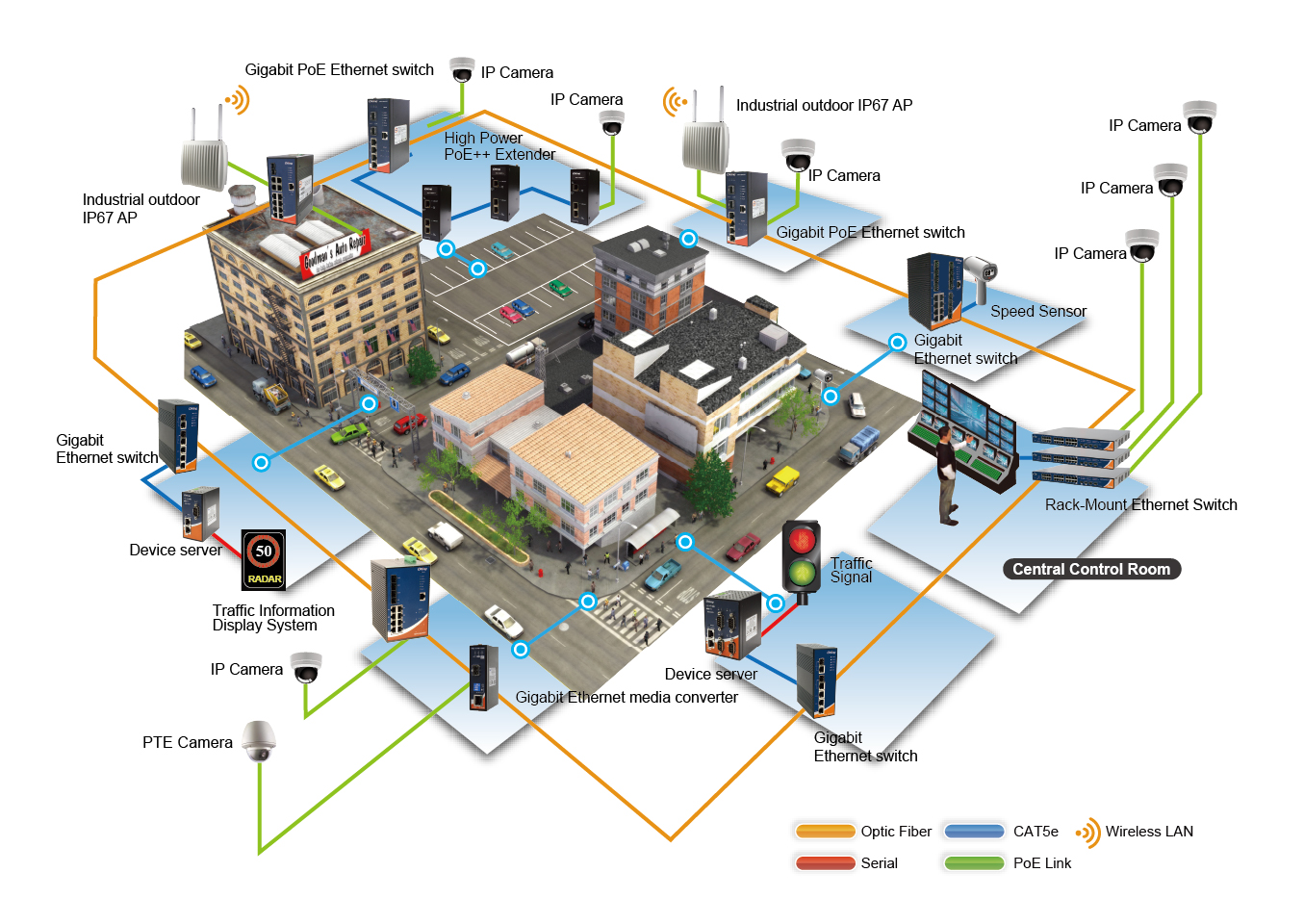
ITS communication architecture is typically organized by layers. Field devices collect video, traffic, and environmental data; roadside cabinets and aggregation nodes handle local connectivity, power delivery, and network protection; fiber or wireless backbones move data across long distances; and control centers rely on monitoring, alarm visibility, configuration management, and traffic management systems for daily operations.
Edge-side endpoints capture real-time operational information across intersections, highways, tunnels, and roadside locations.
Local aggregation and backbone connectivity provide power delivery, long-distance transmission, path protection, and prioritized data transport.
Centralized platforms consolidate network status, alarms, configuration workflows, and traffic operation data for daily management.
Solution Architecture Diagram

ORing Capabilities for ITS Networks

Network Redundancy
Fast recovery for industrial Ethernet ring architectures
using O-Ring, O-Chain, MRP, ERPS, and RSTP/MSTP.
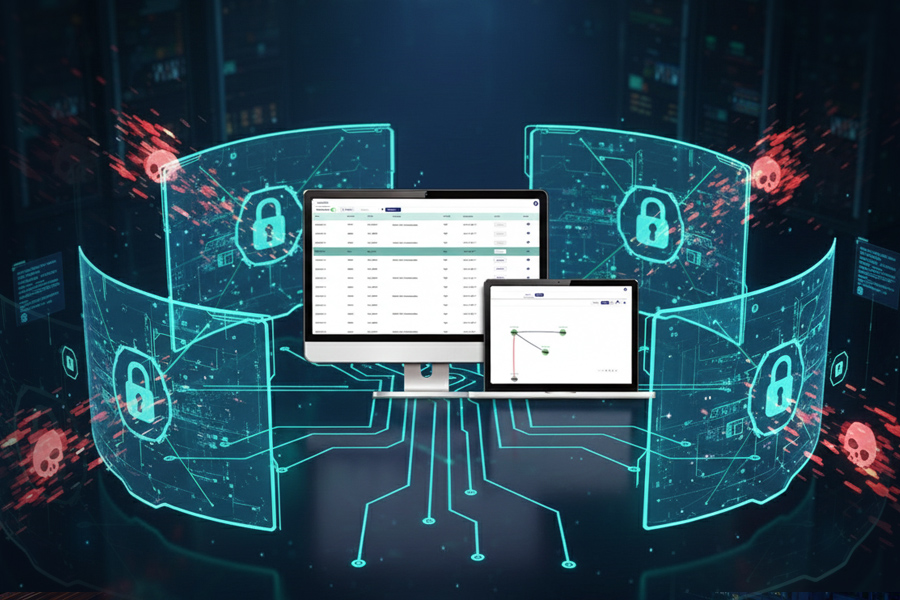
Open-Vision Pro
Centralized topology visualization, device monitoring, alarm visibility, and easier maintenance for distributed industrial networks.

Fiber Connectivity
SFP and SFP+ options support long-distance ITS communication across highways, tunnels, intersections, and control sites.
NEMA TS2 Certification
Certified product options help support roadside cabinet and traffic infrastructure deployment requirements.

IEC 62443-4-2
Security capabilities aligned with industrial cybersecurity requirements for critical infrastructure networks.

Rugged Industrial Design
Wide-temperature operation, industrial EMC design, and durable construction support demanding roadside and tunnel environments.
Recommended ORing Products by ITS Scenario
ORing provides reliable industrial networking solutions for every layer of intelligent transportation systems,
helping you build secure, resilient, and high-performance networks.
Highways & Freeways
Reliable and high-speed network connectivity is essential for highway communication, roadside monitoring, and traffic information systems across long distances.

Core Switches
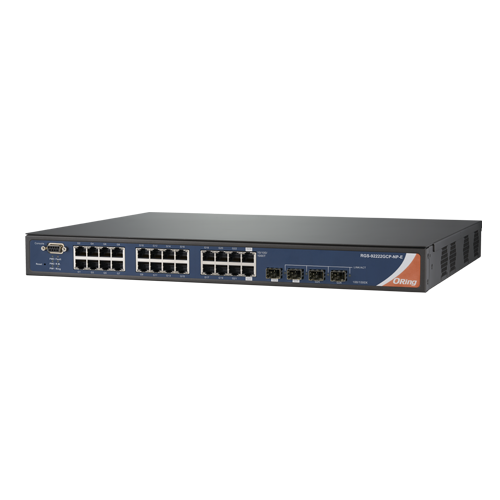
Aggregates highway backbone traffic for roadside and control systems.


PoE Switches
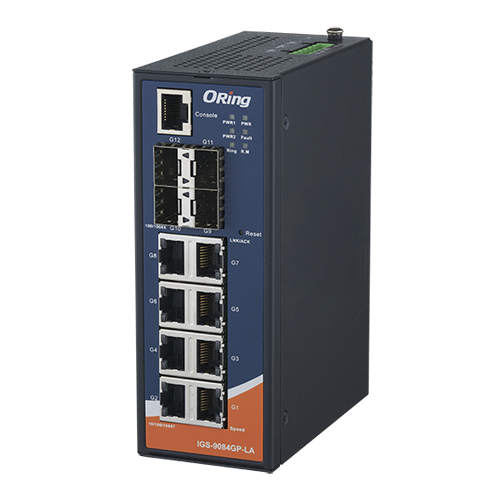
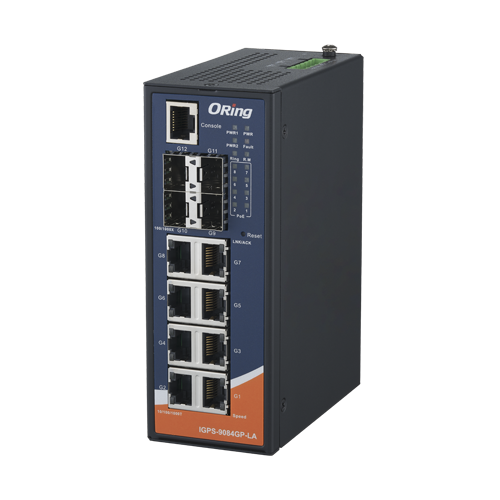
Provides PoE for cameras, sensors, signs, and roadside equipment.

Media Converters
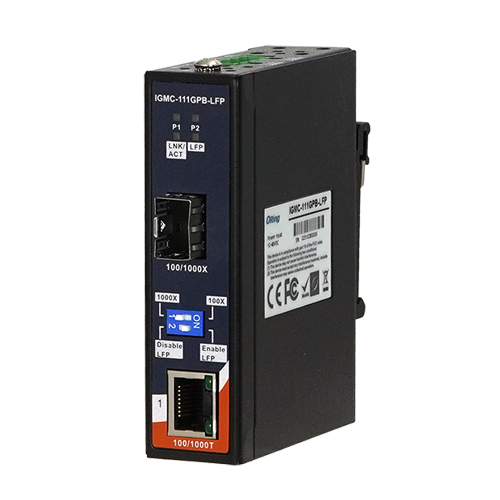
Extends fiber links between cabinets, devices, and remote field sites.
Tunnel Monitoring
Industrial networks support continuous tunnel communication, surveillance, emergency systems, and safety monitoring across confined and demanding environments.

Backbone Switches
Supports tunnel backbone links for video, safety, and monitoring systems.
PoE Switches
Powers tunnel CCTV, emergency phones, monitoring devices.

Serial Device Server
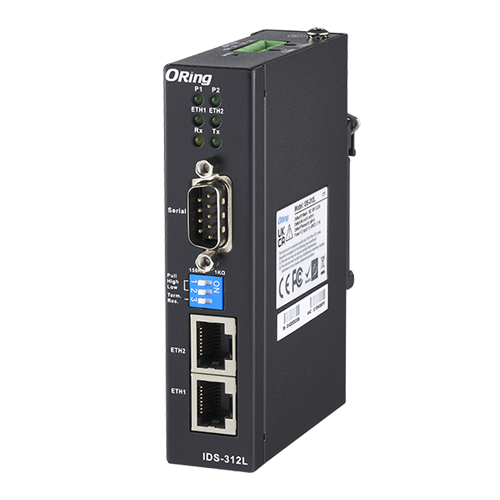
Connects legacy serial devices to IP-based tunnel control networks.
Toll Collection & Weigh Stations
Reliable edge connectivity helps toll lanes, weighbridges, roadside devices, and remote stations exchange data securely and efficiently.

Unmanaged Switches
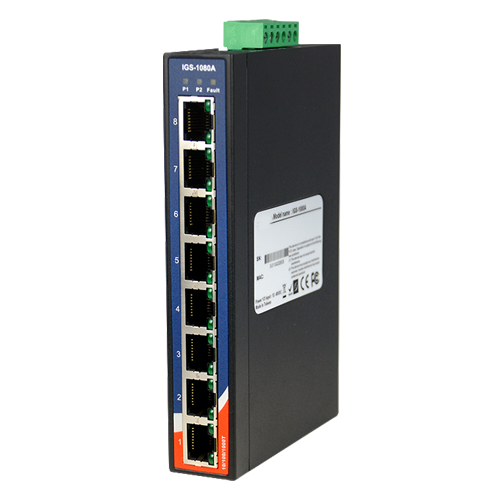
Cost-effective Ethernet connectivity for toll lanes, weigh stations, and edge devices.
Managed Switches
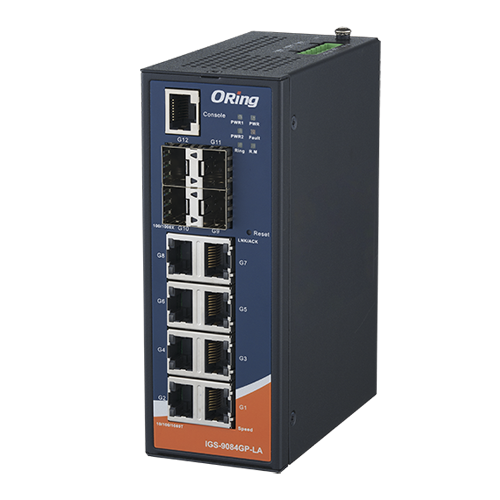
Managed networking for toll collection, weigh stations, and advanced traffic control systems.

Cellular Gateways
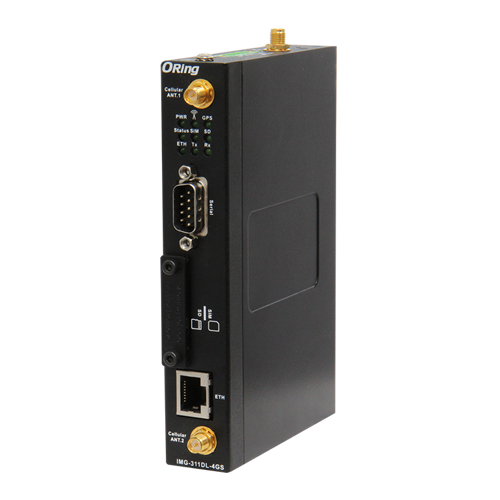
Secure wireless links for remote toll stations, weighbridges, and backup networks.
Traffic Control Centers
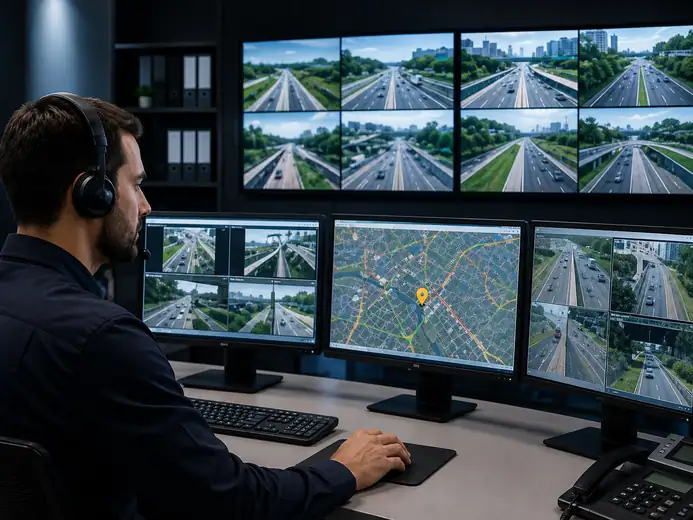
Centralized traffic operations require high-capacity switching, secure routing, and network management tools for reliable control and maintenance.

Core Switches
High-capacity switching for control-room backbone and traffic systems.

Secure Routers
Secure routing and network segmentation for critical transportation infrastructure.

Network Management
Centralized monitoring and configuration for transportation networks.
Proven in Transportation Network Deployments

Supporting Deployment for ITC Abu Dhabi
ORing industrial Ethernet switches were deployed to support roadside surveillance aggregation across Abu Dhabi's traffic infrastructure, helping improve network reliability, cost efficiency, and deployment flexibility.
- Reliable aggregation for distributed roadside camera systems
- Cost-effective industrial Ethernet deployment
- Local partner support for field implementation
Read the Case Study


.png)